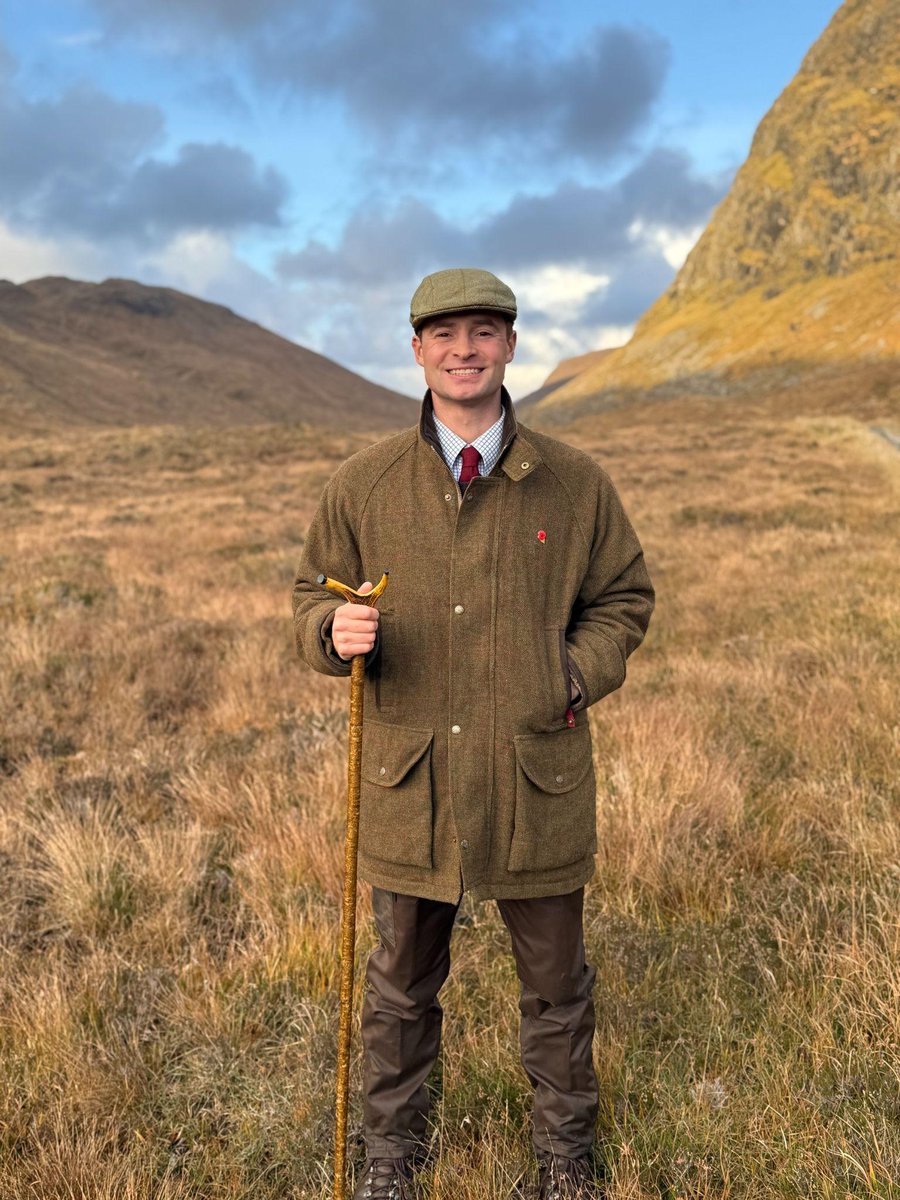
The corporate world chewed me up and spat me back out. It was May 2025, I was 28, working for a top-tier London-based management consulting firm. I was working alongside some of the brightest people I had met, solving "c-suite" level problems (whatever that means), and yet, I was thoroughly miserable. A strange feeling, when literally thousands of people apply each year to jump into your place. I was climbing the greasy pole, supposed to be enjoying my road to riches, but something was missing. Is this what life is supposed to be like? I thought to myself.
I was sitting in the seventh-floor office in the City of London, staring out of the window, contemplating life. I had just read an advert on the Deer Stalking UK Facebook page for a seasonal ghillie job at a castle estate in the Outer Hebrides, and I was wondering what was stopping me from going. After speaking with my Dad for roughly two minutes, as it turns out, not a lot.
I grew up in the rural South-East of England, with fishing, shooting and stalking making up the majority of what I got up to in my free time.
How I learned to fish.
My fishing timeline could have been written by Luke Jennings. From the age of 8, I would investigate every and any splash that I could cast a line into. I progressed to fly fishing when an older relative taught me how to upstream dry-fly fish on a chalk stream in Wiltshire. I then graduated to salmon fishing when a lifelong friend invited me to a river in the Highlands, where I caught my first fish — a five-pound grilse, on the lower beat, at approximately 6.10 am and exactly ten minutes after my friend caught his first fish on the same fly.
Somewhere between leaving university and moving to London, I was taken under the wing of an older fishing mentor — outrageously generous to me, year after year, with no expectation of anything in return. When I asked how I could repay him, he simply said: pass it on to a budding apprentice one day.
How I learned to shoot.
In parallel to my angling education came shooting lessons. Mum and Dad arranged lessons with our gamekeeper, who tragically died earlier this year. He was a bastion of the countryside and someone I looked up to; his strong and silent personality kept us on the right track, and the six driven days he laid on each year ensured we stayed focused.
Family air-rifle competitions captivated me from a young age. I soon moved from cartridges lined up at 10 yards with a BSA springer older than my grandparents to chasing rabbits around our Norfolk family farm. I would lie in wait for hours for the rabbits to appear from their warren, disappear for an afternoon, and come home in the evening proudly presenting a single rabbit. Moving on to a .17 HMR at 16 saw me more industriously thinning out the rabbits and the odd fox.
During my daytime excursions, I encountered muntjac and roe and dreamt of deer stalking. A gap year stalking impala in Zimbabwe — at the invitation of a friend with family there — solidified the appetite. I vividly remember the first impala I took. I was leaning against a tree for stability. I had the ram lined up at some 220 yards. I pulled the trigger with my back leg shaking like a leaf — talk about buck fever.
The .243 — and a duty of care.
Fast forward to starting university: the arrival of my student loan in my bank account coincided with the renewal of my firearms licence. It would have been rude not to apply for a .243. I spent my university holidays marching up and down the farm with my trusty Winchester, counting deer, reading deer management articles and taking the odd one or two.
With a .243 on my ticket came a sense of responsibility and a duty to do things properly. My passion quickly went from wanting to shoot deer to managing them appropriately so that we could sustain a healthy population. I concluded I could take around fifteen muntjac and roe bucks each year without adversely affecting the population. I learnt how to prepare the trophies, butcher the meat, and took pride in gifting prime vacuum-packed cuts of venison to friends and family. I even started guiding friends and family out — and realised how rewarding it was to help someone harvest their first deer.
The Hebrides.
It was set. My credentials as a salmon fisherman were cast, and my skills as a deer stalker were on target. I could effectively blag my way as a ghillie.
Little did I know, the journey I was about to embark on would surpass my expectations tenfold. I drove off the ferry at around 9:30pm in the mid-August golden hour. I could not stop smiling to myself as I drove the windy coastal road to the castle, knowing I was in for one hell of a four months. The car was full of my favourite things — fishing rods, reels and flies; waders, wellies and waterproofs; my .270, tweeds and tick-tweezers.
I had a vague idea of what to expect; I had been on several Scottish sporting holidays. But the details were somewhat blurry. I knew I would be taking the great and the good out on the lochs and the hills — but what would they actually be like?
Fishing the lochs.
On my first day my ghillie skills were put to the test. I was tasked with taking out three boys from a party who had booked an exclusive week, alongside another of the team. We were to fish a particular hill loch and then meet the rest of the party at the bothy. The conditions were against us — the two weeks prior had been over 30 degrees, baking the fish, which survived by lying as deep as they could.
Undeterred, we set off. We hiked the 5 km goat-path, set up the rods — first test passed — and got the boys fishing. A fish kept rising just out of range, so I suggested the guest try double-hauling to get his line out the extra ten feet. He didn't quite have the technique down. Whether out of frustration or eagerness, he insisted I show him. With the guest's rod in my hand and me keen to make a good impression, knowing that — if successful — news of my casting would be shared with the team and my credentials solidified, I went for it. Back and forth the rod went, further and further the line went, one final yank with my left hand would do the trick. I shut my eyes. When I opened them, the line was crumpled in front of me. Not a ripple on the surface of the loch meant I couldn't even blame an errant gust of wind. Bugger.
I made up for it later, scouting for fish to lick my wounds, when I spied a decent-looking brown trout rising at a sedge hatch every couple of minutes. I coaxed one of the boys back, told him to approach the pool with stealth. Bang. He was on. My honour was restored. At the bothy, I overheard him recounting the story. Success.
The next two months saw me fishing most days. It is largely loch fishing — taking guests out in a 100-year-old rowing boat, sans outboard. I learned how to drift along the shoreline, all the best spots, and which flies to use. The highlight, though, was chatting with the various guests all day, listening to their life stories and asking probing questions about their careers.
Stalking the stags.
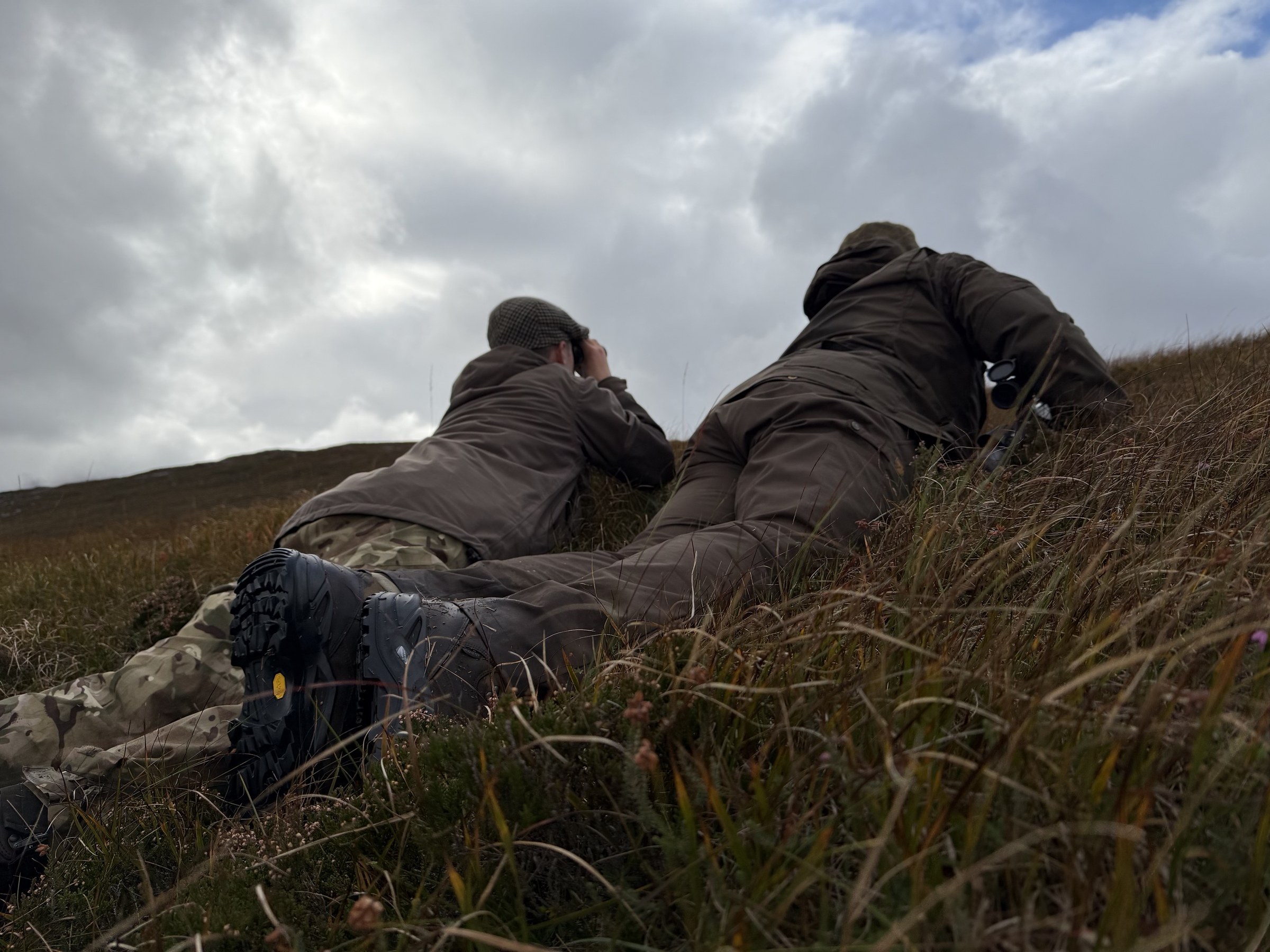
Interlaced with taking guests out on the lochs, I was tasked with taking them into the hills to bag a stag. I quickly solidified my style: I include the guest in every decision made out on the hill. I start the day by showing them the 3D topographical estate map in the rod room, describing how we will stalk the particular beat that day — largely wind-based. Next, we go to the range to make sure they are comfortable with the rifle. When we are stalking, I encourage them to glass the hill each time I do, so they are as much a part of the hunt as I am.
My favourite guest stalk was with a Californian — a member of an exclusive party who had signed up for fishing, stalking and grousing, but it was clear it was the stag he was most excited about. Something about his attitude and demeanour chimed with me; it was clear this was a special day for him. The weather was foul, but it was a beautiful day throughout. We bumped the first group of stags but serendipitously ran into a prime candidate — a mature half-switch — a stag I knew he would be stoked to take.
He was lying down with a group of hinds below a rocky outcrop. We stalked in. At 130 yards we found a suitable shooting position. The guest set up, scope trained on the stag, but in those conditions the beast was not going to stand any time soon. I whistled — the guest primed to take the shot. Nothing. I whistled again, louder. Still nothing. After a full two minutes of progressively louder calls (which is a very long time when you are at the end of a rifle), he stood. Bang. The shot hit its mark.
The hard yards.
Hind season, when the real work starts, was something else. We had a high quota set by the local trust, having performed helicopter surveys a couple of years earlier. I suddenly found myself feeling very popular — having hind stalking to offer my friends. I feared my passion would soon turn into a job, going out almost daily for six weeks in a row, no matter the weather. But as luck would have it, I loved absolutely every second.
What came next.
This is the best thing I have done. Words that I shared with the estate manager as my time was drawing to a close. I had made my passions my profession, pushed myself physically to the limit and not just survived, but thrived. It was exactly what I needed — and it gave me a renewed sense of purpose for the next chapter.
I ended the season having met so many remarkable people I will keep up with, and with an invitation to visit some of the guests in the States. That season is the foundation Griffin Sporting Club is built on.
If you'd like to come stalking with us — or you've simply got questions about how it all works — get in touch. I personally answer every enquiry.